Agriculture is one of humanity’s greatest inventions.
Life runs on sunlight. Plants capture it through photosynthesis. Animals eat plants. Humans eat both. Agriculture made this reliable by selecting species, shaping landscapes and stabilising yields.
Agriculture gave us stable calories. Calories created surplus. Surplus created time. Once fewer people grew food, others became builders, merchants, musicians and scientists. Agricultural productivity unlocked cities, industry and, eventually, satellites in orbit.
So before we start picking holes in agriculture: thank you, agriculture.
Successful technologies become invisible. Agriculture stops looking like a system with inputs, limits and energy conversion efficiencies. It becomes culture, pleasure and the thing your mother insists you are not eating enough of.
Nobody sits down to a plate of “macronutrients”. We eat pasta, bread, a suspiciously expensive salad or something folded into a tortilla at two in the morning.
But underneath all that meaning, dinner is still physics:
sunlight → photosynthesis → living stuff → dinner
For ten thousand years, that was more or less the only path. It’s also why farming became the largest thing humanity has ever built.
The machine that made civilisation
We improved the machine through breeding, irrigation, fertiliser, mechanisation, greenhouses, refrigeration and logistics. The Netherlands is a particularly impressive example: a small, wet country became an agricultural giant by treating scarcity as an engineering problem.
Farmers achieved extraordinary gains per hectare and worker while dealing with sunlight, soil, rainfall and the continued cooperation of the weather.
But that success cannot fight entropy. A train can become faster, cleaner and more efficient. It still needs tracks. Agriculture can improve, but plants still need land, time and suitable weather.
Viewed from Amsterdam, this is easy to forget. Supermarket shelves look nice and full, and farms sit somewhere beyond the ring road. Food appears to emerge from refrigerated lorries, tasteful packaging and an intricate system of discount stickers.
Zoom out, and agriculture occupies roughly half of the world’s habitable land. Most of it, directly or indirectly, to produce animal protein. Nearly everything else humanity has ever built fits into about 1%.
This raises a bigger question.
Not just: How do we farm better?
But: How much of the planet should we farm at all?
Agriculture eats the world
Yields barely change. Feeding more people means clearing more land.
Photosynthesis is brilliant at being photosynthesis
With a couple of billion years of evolution under its belt, photosynthesis is a master at turning sunlight, water and carbon dioxide into forests, grasslands and the vast web of life around us. It creates habitats, stores carbon and gives us fruits, vegetables, grains, nuts and many of the things that make eating enjoyable.
Consider us fans.
But it didn't evolve to maximise protein production for humans. Plants need roots, stems, leaves, flowers and chemical tricks to stop insects. All useful to the plant. Less useful in a protein shake.
Only ~0.25–0.5% of incoming sunlight ends up stored in edible crops (and even less of it ends up as protein). Then we often add a cow, which spends most of its feed on cow business: walking, breathing, staying warm and continuing to be a cow.
Route it through an animal and only roughly 0.01–0.1% remains edible energy. And if you're interested in proteins only, that can fall to roughly 0.001–0.01%.
The route from sunlight to your scoop of whey is impressively baroque.
We make fertiliser, grow crops, turn them into feed, transport that feed to a cow, produce milk, make cheese, recover the dilute watery stream, filter, concentrate and dry it until a powder appears in a plastic tub decorated with lightning bolts and muscles.
By then, more than 99.999% of the original sunlight has been lost along the way.
Decoupling energy and assembly
It doesn't mean that nature is inefficient. It has a lot on its plate: survival, reproduction, competition, soil, weather and entire ecosystems.
We’re asking for something more specific, in controlled conditions: make lots of nutritious, tasty protein.
For most of history, food needed land because capturing energy needed land. More plants required more sunlight; more sunlight required more land.
Even fossil fuels are ancient sunlight: prehistoric biomass with excellent shelf life and catastrophic unboxing consequences.
But humans have finally learned to capture energy without growing crops.
Solar, wind, geothermal and nuclear let us separate two jobs historically bundled together:
- capturing energy;
- using energy to assemble organic matter.
We have become surprisingly good at the first. Solar panels capture sunlight far more efficiently than crops turn it into food. Electricity can be moved, controlled and converted into simple molecules.
We are less impressive at assembly of complex organic molecules. Humans can manufacture microchips only a few atoms wide, but can't recreate an apple by stirring carbohydrates, fats and proteins in a bucket.
We can make Pringles. We can't make an apple.
That suggests a sensible division of labour.
Humans provide clean energy, equipment and control. Nature performs the difficult molecular assembly.
And it turns out microorganisms excel at it. They grow exponentially and turn simple inputs into proteins, fats, vitamins, flavours and thousands of compounds that would be deeply inconvenient to manufacture one by one.
The agricultural route
sunlight → photosynthesis → edible plant parts → edible animal parts → protein
roughly 0.001–0.01% sunlight-to-protein
The Farmless route
sunlight → electricity → simple molecules → fermentation → protein
Around 6–7% sunlight-to-protein
A shorter route from energy to protein.
The agricultural energy route
Almost all our food starts with the same source of energy: the sun.
Our goal isn't to replace nature. It’s to create a new interface between the best of humanity and the best of nature. That interface is fermentation.
Everyone sticks to what they are good at.
Deflationary protein
Put the price of food and the price of solar panels on one chart, both at 100.
Brewing protein with energy
Fermentation is one of humanity’s oldest technologies: bread, beer, cheese, yoghurt, soy sauce and wine.
Long before we understood microorganisms, we discovered that leaving the right ingredients in the right conditions could make them safer, tastier, more nutritious or simply get us drunk.
For millennia, process control was simple: leave this here and see whether it smells promising tomorrow.
Our equipment and tools have improved. But the principle is the same. Microorganisms turn simple inputs into complex and tasty foods.
Yet today almost all industrial fermentations still begin with agricultural sugars. The fermentation may live in a shiny steel tank, but behind it sits a monoculture of corn, beet or sugarcane.
At Farmless, we remove photosynthesis from the equation. Instead of crop-derived sugar, our microorganisms consume liquid inputs made with energy and simple molecules derived from air, water and minerals.
Inputs in. Microorganisms multiply. Postbiotic protein out.
It sounds suspiciously straightforward.
But the difficult part is everything in between.
Making a postbiotic protein
We've developed a protein-rich postbiotic ingredient for sports nutrition and high-performance diets.
The goal is an excellent ingredient: complete amino acids, good digestibility, satiety and support for recovery.
But food is not just numbers on a label. Protein binds water, carries flavour, thickens shakes and forms gels. A perfect amino-acid profile means little if the shake tastes and feels like wet plaster. So we test more than protein content. Does it dissolve, foam and emulsify? Behave consistently? Taste good without explanation? Would anyone voluntarily take another sip?
Hundreds of fermentation and harvesting trials have improved both the ingredient and the process. We have validated our fermentation-to-protein process at pilot scale.
Humanity can now make a nutrient-dense, functional postbiotic protein without photosynthesis. Now we just need to make it reliably and affordably enough to beat whey.
Continuous is the name of the game
Most fermentation happens in batches: fill, grow, harvest, clean, repeat.
It works. Beer has done rather well from it.
But batch fermentation is the equivalent of industrial Groundhog Day. Expensive equipment spends much of its life filling, waiting, emptying or being cleaned.
Continuous fermentation keeps fresh inputs flowing, protein leaving and the culture productive. Crops take months. Animals take years. Our microorganisms take hours.
We compress the protein supply chain in space and time.
It sounds like a modest operational improvement. But it changes the economics of the whole system.
Batch stops. Continuous keeps producing.
Traditional industries scale by making equipment bigger. Need more output? Build a larger vessel. Eventually you get a stainless-steel cathedral: expensive, rigid and painful to redesign.
Continuous production offers a way out: process intensification.
Instead of scaling volume, we increase output per unit volume.
Better biology, sensors, hardware and software keep microorganisms closer to their theoretical limits. As productivity rises, reactor size shrinks.
There are, of course, real engineering challenges. Oxygen transfer becomes non-trivial when everything is running at high productivity. With growth this fast, heat removal becomes a first-order design constraint. At scale, you are effectively managing thermal output closer to an SMR than a traditional brewery unit. Mixing, sterility, and control stability all become more demanding as you push the system harder.
But these are merely engineering constraints, not laws of physics. Conveniently, engineers enjoy those.
The result: less capital locked in one asset (hello asset financing), smaller capital jumps in capacity, faster iterations, and increased learning rates.
And once a system is small enough to replicate, repetition changes everything.
Factories should have generations
Instead of one bespoke mega-plant, we deploy standardised units. This means fewer adventures involving five consultancy firms, a mysterious Lang factor and a commissioning date nobody quite believes.
With every module, we learn which pump survives, which valve fouls, which control strategy stabilises production and which supplier will not receive their Christmas card.
Each generation gets simpler and better. The logic looks less like a traditional food factory and more like successive versions of a high-performance engine (I'm looking at you, 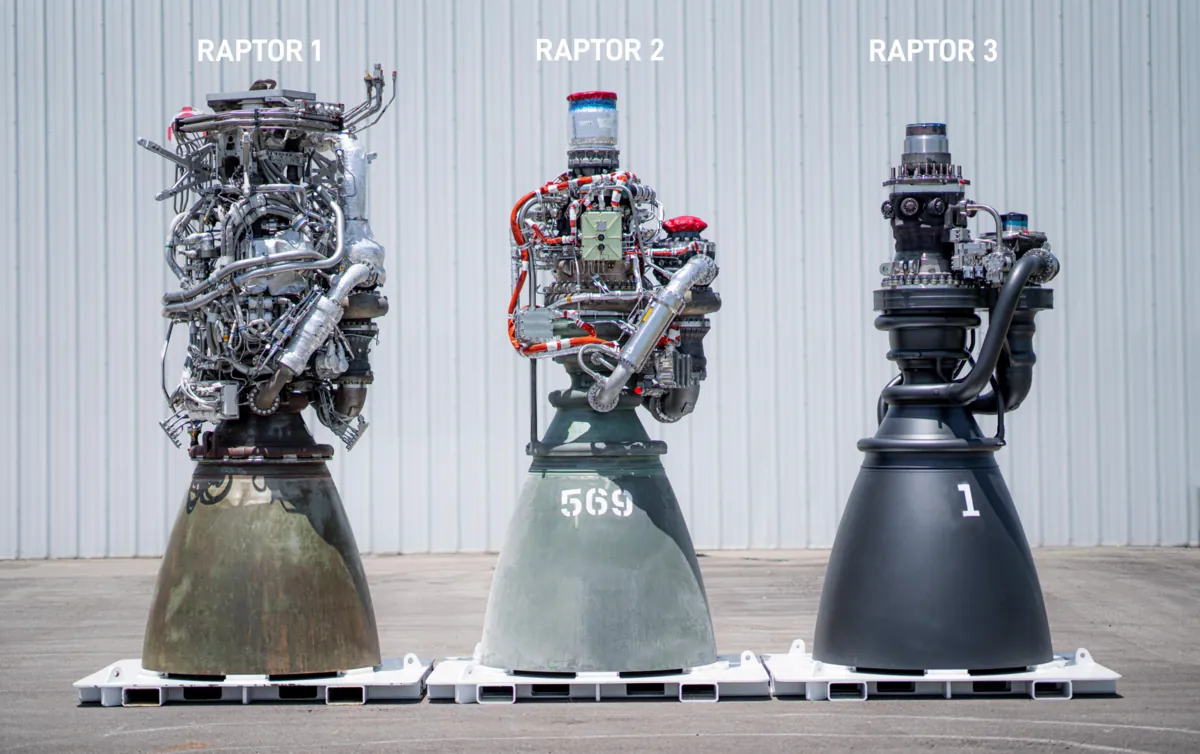 ).
Except our engine is alive.
That means it’s a tightly coupled system. Good biology cannot compensate for unreliable equipment. Good hardware cannot rescue poor control. Machine learning cannot repair a bad valve... though it may confidently predict when it will ruin your weekend.
So we are a vertical integrator. We design the fermentation, the process, the controls, the software and the plant ourselves, and buy what is already a commodity: energy and steel. The integration is the innovation.
Each one feeds the next. Every run trains the models, and the simulations of one generation design the one after it. Our goal is a modular protein platform that improves every time it's deployed.
Land abundance
We sell protein. But what we really unlock is freeing land.
Whey protein isolate
Life appears to be rare. So far, we have not found it anywhere else. Increasing its diversity on the one planet where we know it exists feels like a worthwhile project.
That does not mean every liberated hectare instantly becomes an ancient forest, complete with wolves, wildflowers and a tasteful David Attenborough voice-over.
It becomes a choice: rewilding, regenerative agriculture, energy, housing, food forests, compute or abundance we have not yet imagined.
Farms will still grow fruit, vegetables, grains and everything best shaped by soil, seasons and sunlight. These landscapes are culturally rich, economically vital and often beautiful.
A sun-warmed tomato is not a problem to be engineered away.
But farms should be free to focus on what they do best: diverse, seasonal, place-based foods. Not remaining the default system for every bulk protein molecule humanity needs.
Giving biology access to energy beyond photosynthesis could also increase how much life Earth can sustain, and help sustain life beyond Earth.
By creating more Farmless proteins, we create space for life itself.
Our mission is to free life from the limits of land.